Kuba
The PeasantsKuba is a farmhand at Boryna’s farmstead whose life joins skilled labor, religious devotion, and a history of dispossession. His limp marks an old wound, but it does not define him: he works, tends animals, teaches Witek, and remembers a violent past that the village’s settled hierarchies would rather leave buried. Shot again while poaching, he refuses the hospital and amputates his own leg. His death exposes the vulnerability of a laborer whose service is valued, but whose place in the community remains sharply limited.
Identity and Place in the Village
Kuba is a hired farmhand rather than a landowning farmer. The distinction matters in Lipce, where standing and authority follow property: when Kuba once pushes forward among the farmers at church, his gesture outrages the prominent men, and Boryna tells him that the established order will not be changed by an individual. Even kindness from a powerful person does not erase that boundary. The Parish Priest gives Kuba a zloty for birds, and Kuba is deeply moved, saying that only the priest respects him. His gratitude is sincere, but it also shows how little respect he expects from the wider community.
At Boryna’s farmstead, Kuba’s place is made visible through the work he does and the animals he knows. He rises before the household, limping from an earlier gunshot wound, and goes to wake Witek the Stork-Keeper. Seeing the boy barely awake, he tells him to sleep longer and adjusts the sheepskin over him. He then washes, says his prayers at the stable threshold, and begins the morning’s work. He rolls out and greases the cart, waters the horses, replenishes their hay, and carries wheat mixed with oats to a pregnant mare. He speaks to her gently and plans the day’s labor around what she can manage, promising to gather leaf litter without wearing her out. His care is practical and attentive: he notices an animal’s condition and treats it as a fellow creature with needs.
Work, Faith, and Companionship
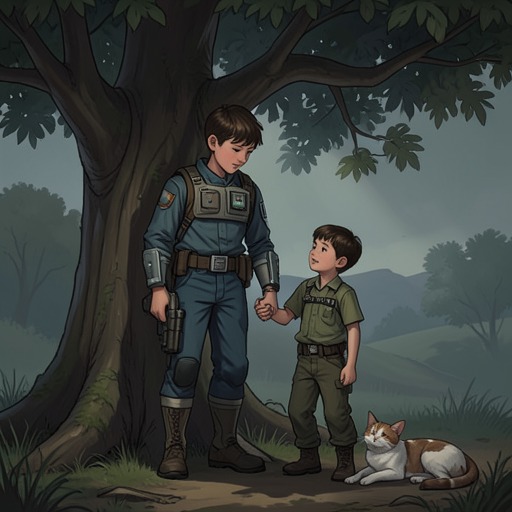
Kuba’s relationship with Witek combines authority with tenderness. He wakes the boy for chores and teaches him prayers while they watch the livestock. When Witek stumbles over the words, Kuba corrects him sternly, even prodding him with his crop; yet elsewhere he lets the sleepy child rest beneath the sheepskin. The contrast makes their bond neither sentimental nor distant. Kuba expects Witek to learn and work, but he also looks after him.
His care extends to the farm’s animals. He feeds and handles the horses, worries about the pregnant mare, and later pauses beside a dead cow hanging in the barn. He reflects on the creature’s death and on the meat it will provide for Sunday dinner. The moment joins pity to the hard arithmetic of rural life: the cow is mourned as a life lost, but also understood as food. Kuba’s everyday closeness to animals recurs after his death, when the mare and foal are neglected. Seeing the foal at an empty manger, Hanka thinks that Kuba’s heart would break to see them that way.
Kuba’s religious practice is woven into the same working routine. He kneels to pray before the day begins and gives the The Parish Priest partridges he has caught in snares. When he later explains the exchange at Jankiel’s inn, he says he brought six birds to the priest and received a zloty. Jankiel points out that he would have paid ten groszy apiece, but Kuba’s account emphasizes not only the money: the priest’s recognition has made a powerful impression on a man accustomed to being overlooked. His piety is personal and habitual, not a sign that he has escaped the social order that keeps him subordinate.
Memory and Dispossession
Kuba’s history emerges as he stands with Witek among the nearly erased graves of the dead. He recognizes one as his mother Magdalena’s grave and recalls that his father, Pieter Socha, had owned land before serving as a coachman at the manor. After his father died, Kuba’s uncles took the land, and Kuba was left minding the master’s pigs. His recollection gives a particular family history to the anonymous graves and shows how early he was pushed into service.
He also remembers working for the manor and accompanying the young squire during the uprising. Kuba says that he went when the others went and that he did what he was told; his account presents participation less as a chosen patriotic cause than as an extension of dependence. He carried the wounded young squire on his shoulders and was later sent back with letters to the old master. During that journey, he was shot in the leg. The wound did not heal: he describes dragging himself through snow and bitter cold until he reached the manor and found its buildings burned and the old master, old mistress, his mother, and a maid lying dead in the garden. His grief breaks through the quietness of his narration. The memory makes the injury and limp part of a longer history of service, violence, and loss, rather than an incidental mark on an otherwise comic farmhand.
Injury, Death, and Aftermath
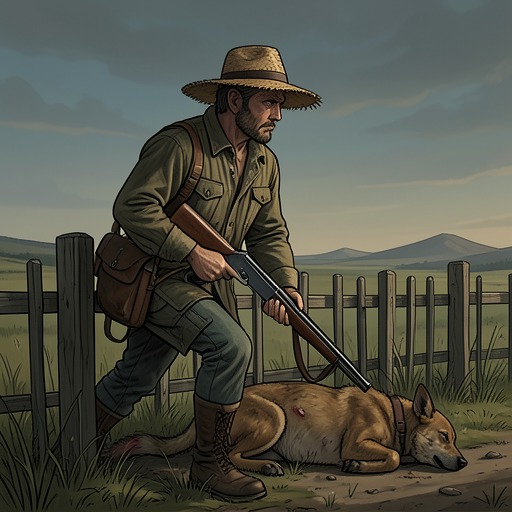
Kuba is shot again while poaching, and the wound becomes infected and badly swollen. When Ambrozy discovers it, the calf is mauled and festering, and Kuba admits that the woodsman shot him. He has kept the injury secret rather than seek help. Later, Łapa alerts the household by tugging at a visitor’s clothing and leading him to the stable. Kuba is found collapsed over the stall threshold, white with blood loss. His leg has been hacked off at the knee; a bloodied axe lies nearby, and the grindstone has been knocked out of place. He has tried to remove the ruined limb himself, apparently afraid of the hospital and convinced he could manage alone.
Kuba briefly opens his eyes and is lucid, but the loss of blood proves fatal. At the close of the episode, he lays his soul to rest at the holy feet of the Lord. The starkness of his end contrasts with the repetitive, careful labor through which the novel has shown him living: the hand that fed horses and steadied Witek turns to an axe in a desperate attempt to survive. His decision is an act of self-reliance under extreme circumstances, but it cannot overcome the consequences of the wound.
Memory in the Living Farm
After Kuba’s death, his absence is felt through the work and care he had quietly supplied. The stable becomes a place of unease when someone reports that fodder is being tipped out and horses are whinnying; because Łapa growls and then seems to fawn at an empty space, the household wonders whether Kuba’s soul has returned. The belief belongs to the village’s everyday religious imagination, where the dead remain close to familiar places and unfinished attachments.
Hanka’s later grief is more intimate and concrete. Finding the mare chewing at an empty manger and the foal pulling straw from its bedding, she puts hay in the rack and strokes the foal’s nose. Her thought that Kuba would be heartbroken joins his remembered kindness to the disorder of the farm after his death. Kuba has no land or formal authority to leave behind, yet the animal care he practiced becomes a measure of what the household has lost. His story therefore holds together two kinds of exclusion: the material hierarchy that denied a laborer the security of ownership, and the personal bonds through which his daily service made him indispensable to the lives around him.